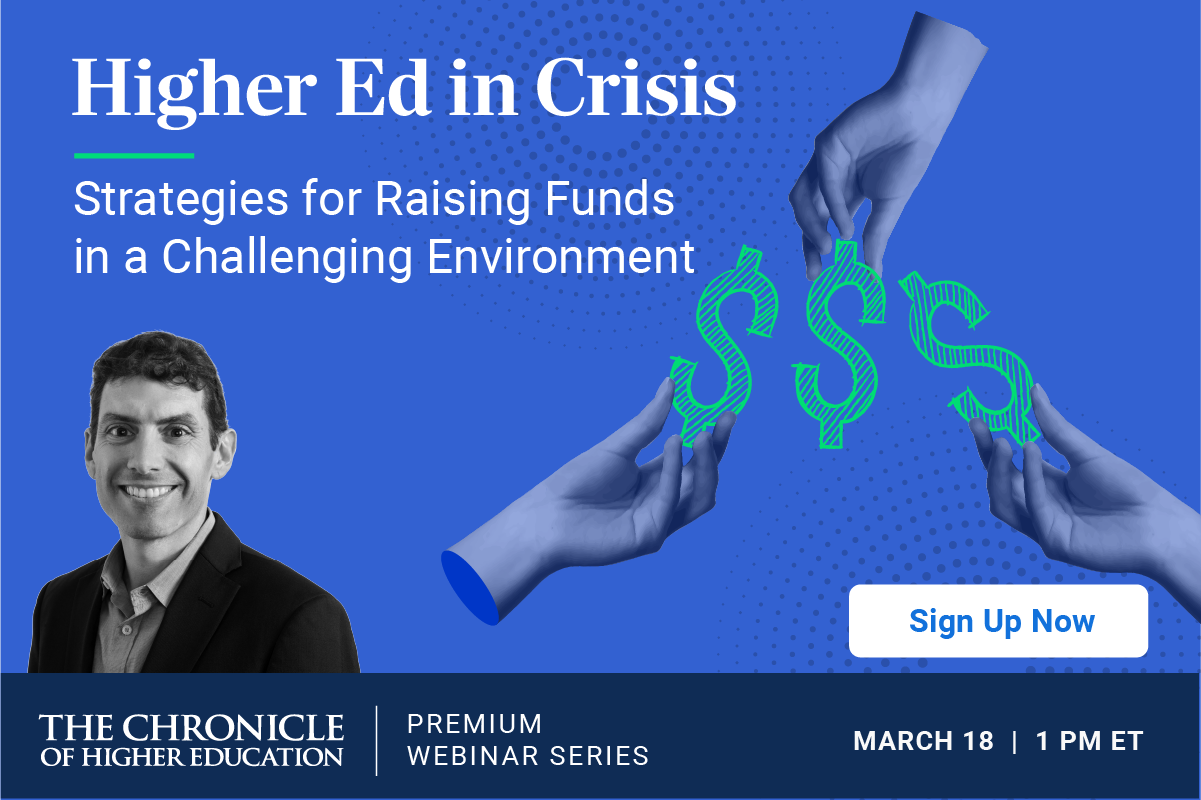
Higher Ed in Crisis: Strategies for Raising Funds in a Challenging Environment | March 18, 2026
Higher Ed in Crisis: Strategies for Raising Funds in a Challenging Environment | March 18, 2026
Couldn't load pickup availability
A 2025 headline from The New York Times posed a crucial question facing higher-ed institutions: “Can Donors Fill the Major Budget Holes That Colleges Face Under Trump?” The article explored the different strategies colleges and universities are taking as changes to federal policy restrict research funds, support for certain types of scholarships, and other campus work.
The political environment for higher education presents a stark challenge for those who lead institutional advancement and development work and deans and others who raise funds for their schools, departments, or specific academic programs. Some have leaned into the disagreements with the administration, using the contrast as a way to rally alumni and donors.
Others have shied away from referencing President Trump’s frequent broadsides at higher ed, trying to stay out of the fray in its appeals.
The political moment complicates an already challenging picture for higher-ed fund raising.
* The American public is more skeptical of the value of higher ed than it was in the past, potentially souring those who may want to give to a college.
* Enrollment uncertainty means institutions will likely need to lean on philanthropic support more than they have before.
* The scrutiny by the federal government and some states of diversity, equity, and inclusion efforts may limit what donors can support in such areas. For those institutions who want to raise funds for DEI work, it could also draw criticism from some alumni or supporters.
To help advancement officers as well as academic administrators charged with raising funds, The Chronicle convened a 75-minute webinar with a panel of experts on March 18 at 1 p.m. ET. The session covered:
- How the rapidfire federal-policy changes affect institutional fund raising, the role of advancement and development officers, and likely increase the demand for private funds to support research and other key activities;
- Ways to improve outreach to alumni, especially younger ones, in today’s tech-driven world;
- Tips to improve coordination and communication between the fund-raising office and deans and other academic leaders;
- Advice for how to highlight a college’s mission in a crowded marketplace of causes.
In addition to receiving the recording and Q&A, registrants will receive Chronicle materials related to the topics, and get access to a special followup Q&A.
Please note that the program will be recorded and distributed to registrants upon its conclusion. If you won’t be able to join us live, you can still save your spot to access the recordings and resources at a later time.
Event access instructions will be sent separately, from Zoom and from workshops@cs.chronicle.com. Please add workshops@chronicle.com and workshops@cs.chronicle.com to your approved senders to ensure that communications arrive directly to your inbox.
Speakers:

Liz Rothenberg, President, Rothenberg Research LLC
Dr. Liz Rothenberg is a highly accomplished higher education researcher and strategist with over 17 years of experience developing best practice research studies, benchmarking reports, and presentations for colleges and universities. She has a proven track record of leading large-scale research projects and delivering data-driven insights that help higher education institutions improve fundraising performance, reimagine the donor experience, prepare for changing donor demographics, and increase organizational efficiency.

Matthew T. Lambert, Senior Vice President for University Advancement, William & Mary
As Senior Vice President of University Advancement, Matthew T. Lambert '99 oversees all William & Mary efforts related to alumni engagement, private fundraising and philanthropic outreach, university marketing and communications, and career development & professional engagement. Under Dr. Lambert's direction, University Advancement's overarching goal is to create a lasting, robust culture of engagement and philanthropy among the greater William & Mary community.